


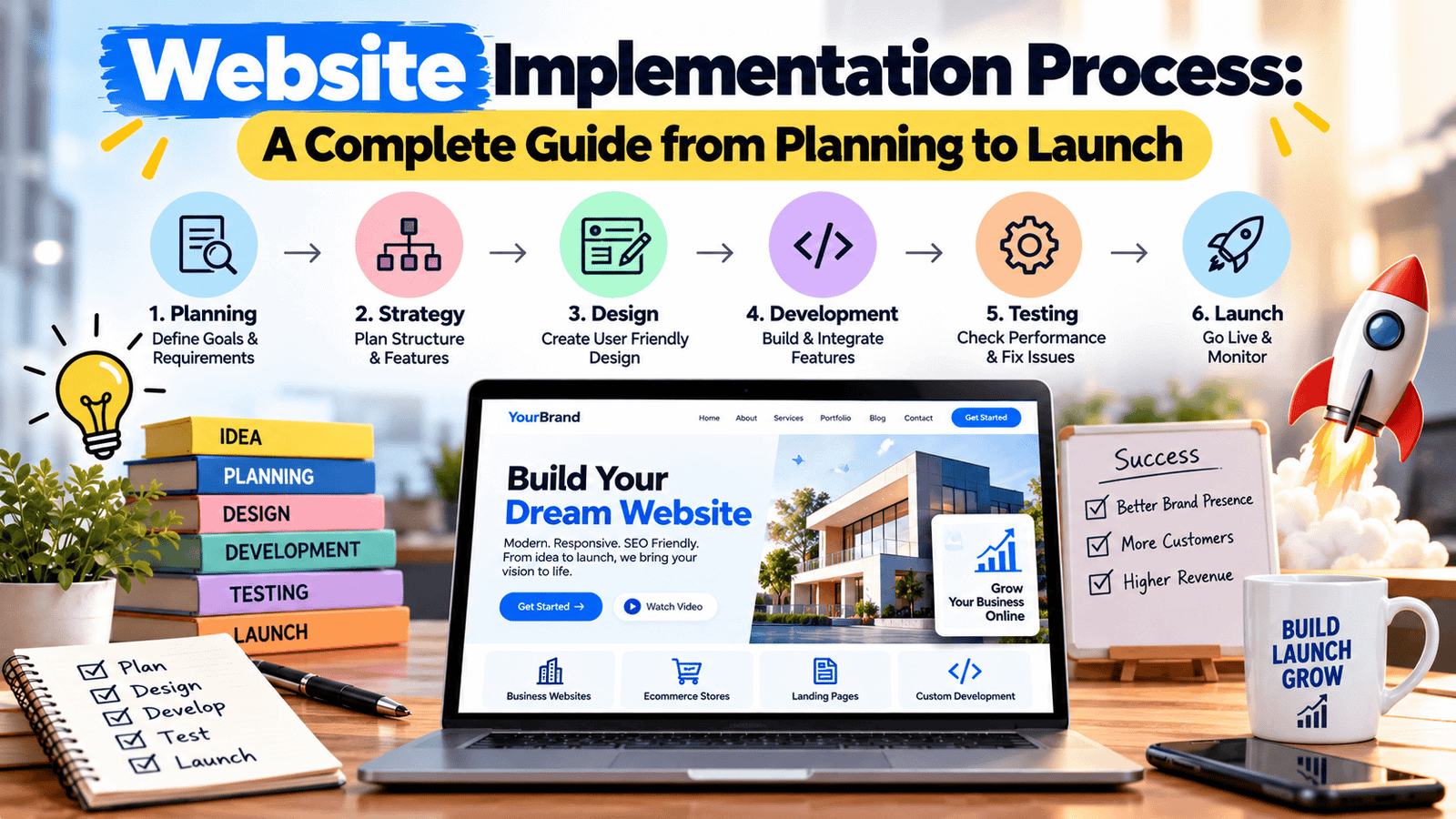
Website Implementation Process: A Complete Guide from Planning to Launch
Learn how a professional website moves from initial planning and design to development, SEO, testing, optimization and final launch.
Building a Website Step by Step
A successful website is not created simply by designing a few pages and publishing them online. The website implementation process involves several stages, from understanding business requirements and planning the website structure to development, testing, SEO setup and final launch.
Whether you are building a business website, ecommerce website, corporate website or service-based website, following a structured implementation process helps reduce errors, improve user experience and create a website that supports long-term business goals.
Requirements
Planning
Design
Development
Launch
Understanding Business Requirements
The first stage of website implementation is understanding what the business actually needs from the website.
Before development begins, the project requirements should be clearly defined. This includes understanding the company's services, products, target audience, competitors, business objectives and expected website functionality.
For example, an ecommerce business may require product categories, product variations, shopping cart functionality, payment gateways, customer accounts and order management. A service-based business may focus more on enquiry forms, WhatsApp integration, service pages, location pages and lead generation.
Why Requirements Matter
A clear understanding of the requirements creates a strong foundation for the entire website implementation process and helps prevent unnecessary changes later.
Website Planning and Structure
Once the requirements are finalized, the next step is planning the website structure.
This involves deciding which pages the website needs and how those pages will connect with each other. A typical business website may include:
- Home
- About Us
- Services
- Individual Service Pages
- Industries or Locations
- Blog
- Contact Us
- FAQs
For ecommerce websites, the structure may also include product categories, product pages, collections, cart, checkout, account pages and other ecommerce sections.
Website structure is also important for SEO. A well-organized structure helps search engines understand the relationship between different pages while making navigation easier for visitors.
Website Design and User Experience
After planning the structure, the website design process begins.
The design should reflect the company's branding while making the website easy to use. This includes selecting typography, colors, layouts, buttons, images, icons, navigation elements and other visual components.
User experience should remain a priority throughout the design process. Visitors should be able to quickly understand what the business offers and find the information they need.
Design Considerations
- Simple navigation
- Clear calls to action
- Mobile-friendly layouts
- Easy-to-read content
Visual Experience
- Consistent branding
- Proper spacing
- Professional imagery
- Fast and intuitive interactions
The goal is not simply to make the website look attractive. The website should help visitors move naturally from discovering the business to taking an action.
Website Development
Once the design is approved, the website moves into the development stage.
During development, the planned designs and website structure are converted into a functional website. Depending on the project, technologies such as WordPress, WooCommerce, Shopify, Laravel or custom development frameworks may be used.
The development process may include:
- Creating website pages
- Building navigation
- Adding forms
- Developing product pages
- Setting up ecommerce functionality
- Integrating payment gateways
- Adding WhatsApp or enquiry functionality
- Connecting third-party services
- Creating responsive layouts
- Configuring website settings
The development approach depends on the website's requirements, budget, scalability and future plans.
Content Implementation
Website development and content implementation work together.
At this stage, the approved text, images, videos, product information, service descriptions and other content are added to the website.
Content should be organized according to the website structure. Important information should be easy to find, while headings and sections should make longer pages easier to read.
Content and SEO
For SEO-focused websites, content implementation should also consider relevant keywords, page titles, headings, internal links, image alt text and search intent.
The objective is to create content that is useful for both visitors and search engines.
SEO Implementation
SEO should not be treated as something that happens only after a website is launched. Important SEO elements can be implemented during the website development process itself.
Technical and on-page SEO may include:
- SEO-friendly URLs
- Proper heading hierarchy
- Meta titles and descriptions
- Internal linking
- Image optimization
- Mobile responsiveness
- XML sitemap
- Robots.txt configuration
- Canonical tags where required
- Structured data where appropriate
- Search-friendly website architecture
Keyword mapping is also important. Different pages should target relevant search terms instead of having multiple pages competing for the same primary keyword.
This helps create a more organized SEO strategy and reduces the possibility of keyword cannibalization.
Website Testing
Before launching the website, thorough testing should be performed.
A website may look perfect during development but still contain broken links, layout issues, form problems or mobile responsiveness errors.
Testing should cover different devices and browsers.
For ecommerce websites, the checkout process should be tested particularly carefully because even a small technical issue can prevent customers from completing a purchase.
Performance and Security Checks
Website performance is another important part of implementation.
Large images, unnecessary scripts, excessive plugins, poor hosting configuration and unoptimized code can affect loading speed.
Before launch, developers should review images, scripts, caching, plugins, database performance and other factors that may affect website speed.
Performance Checks
Review images, scripts, caching, plugins, hosting configuration and other elements that may affect page loading performance.
Security Checks
Security should also be checked, particularly for websites that collect customer information or process online payments.
For WordPress websites, this can include reviewing plugins, themes, administrator accounts, SSL configuration, backups and security settings.
Final Review and Client Approval
After development and testing are completed, the website should go through a final review.
The client or internal team can review the website page by page and identify any final changes required.
Once the final corrections are completed and approved, the website is ready for launch.
Website Launch
The final stage is publishing the website for users.
Before making the website live, the domain, hosting, SSL certificate, DNS settings, analytics, Search Console, sitemap and other important configurations should be checked.
After launch, the website should be monitored to make sure everything continues to work correctly.
Post-Launch Monitoring
Google Analytics and Google Search Console can be connected to monitor website traffic, search performance, indexing, clicks, impressions and other important data.
A Website Should Be Built for Long-Term Growth
The website implementation process is a structured journey that goes far beyond website design and development. It includes planning, design, development, content implementation, SEO, testing, performance optimization, security checks, approval and launch.
A well-implemented website provides a better experience for visitors while creating a strong foundation for SEO, digital marketing, lead generation and ecommerce growth.
For businesses, the objective should not simply be to launch a website. The goal should be to build a website that is functional, user-friendly, SEO-ready, scalable and aligned with long-term business objectives.
 SEO Company in India
 Social Media Marketing
 Pay Per Click Management
 Content Marketing
 Local SEO Services
 WordPress Services
 eCommerce SEO
 International SEO
 Website Development